Abandoned train station underground pool
Our Chemical HeartsThe Abandoned train station underground pool is a concealed place of refuge and mourning in Henry Page’s story. Reached through an abandoned station and down a spiral staircase, it becomes the destination Henry recognizes when Grace Town goes missing. Its still water holds both the crisis of her grief and the objects through which she has preserved Dom; when she returns those objects to the water, the location becomes the setting for an act of letting go whose outcome remains uncertain.
Setting and Access
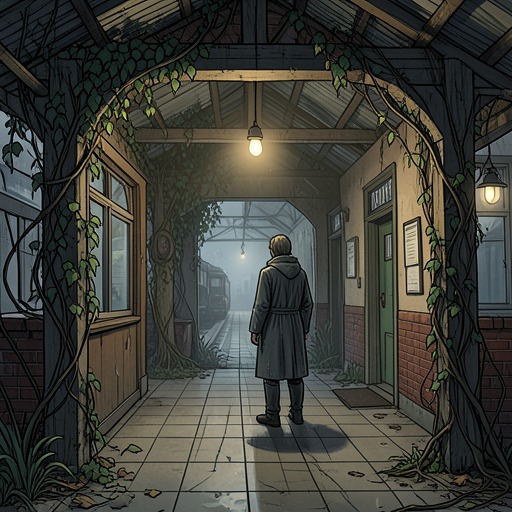
The pool lies in the basement of an abandoned train station. Henry reaches it by driving into the city, climbing a cast-iron fence, crossing a hedge, picking the lock to enter the building, and descending a spiral staircase. The route makes the pool difficult to reach: it is not a public gathering place but a secluded space reached by crossing several physical boundaries. The evidence presents it as dark, with moonlight the only illumination, and its still water deep enough for Grace to stand waist-deep in it. Fish move through the pool, while debris covers the floor below.
The pool is part of a larger setting, but the descent separates it from ordinary street life. Above ground, Henry is moving through the city in search of a missing person; below ground, he finds Grace in a space where she can remain apart from the searchers and from the assumptions they make about her. Its hidden position therefore matters practically as well as emotionally: Henry must identify the place and make his own way inside before he can reach her.
A Place Recognized Through Memory
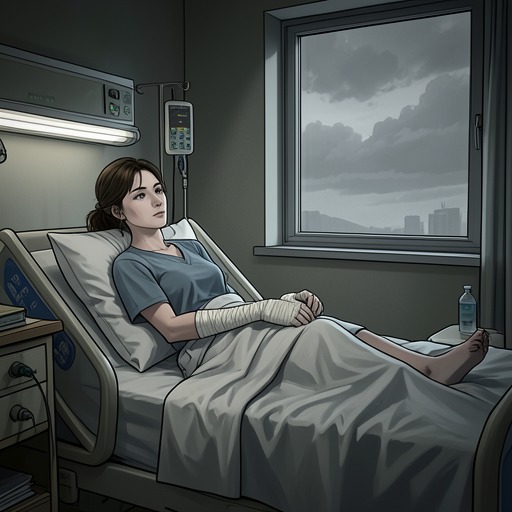
When Grace disappears, Henry and others spend hours searching and waiting. The police arrive, ask questions, and suggest that she may have harmed herself. Henry, too, imagines that possibility. Then the thought of the fishpond changes his understanding of where she might be. He realizes that the pool is the place to look, whether Grace is alive or dead, and immediately leaves to find her.
The recognition links the pool to knowledge of Grace that cannot be supplied by the search’s public procedures. Henry’s realization is not based on a confirmed message or an instruction from her; it comes from remembering this particular place. He reaches the basement and finds Grace alive in the water. The discovery reverses the fear that has shaped the search, but does not resolve what brought her there. The pool holds a crisis that Henry can interrupt by arriving, not a grief he can simply remove.
Encounter and Grief
Grace is alone in the pool when Henry finds her. She is dressed in white and wears a wreath of pale flowers in her hair. He enters the water, gives her his coat, and urges her to come out. At first she does not move. Then she breaks down in tears and collapses against him, expressing her anguish over Dom’s death and wishing that she had died instead. Henry holds her and apologizes, offering presence rather than an explanation for the loss.
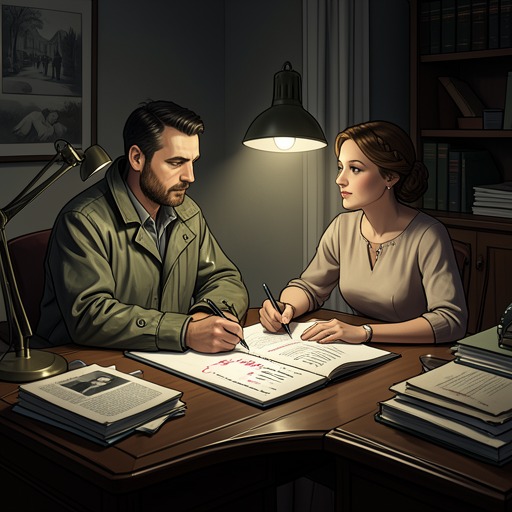
Afterward, Grace tells Henry that people had watched her closely following Dom’s death because they expected her to attempt suicide. She says she was not depressed but angry, and that the scrutiny had prevented her from mourning in peace. Her account complicates the assumptions that had shaped the search: others’ fear for her safety had not meant they understood what she was experiencing. The pool is where Henry encounters that distinction directly, as Grace explains her anger and begins to tell him about Dom.
Dom’s Keepsakes and the Pool’s Later Meaning
Grace’s account of Dom reaches back to their childhood. She met him when she was nine, during a period when her father was dead, her mother had been absent for days, and there was no food at home. Her uncle left her with Dom’s mother, Mary. Dom welcomed her into a day of games and cartoons, and Grace recalls loving him and his family from that first meeting. This history gives the objects she brings to the pool the weight of a relationship that began long before Henry knew her.
A small metal box on the steps contains items from Dom’s shrine: an anchor necklace, a Strokes keychain, and the Ramones shirt Grace had been unable to wash. She takes Henry’s hand and leads him back into the water, releasing the keepsakes one by one. The box itself goes last. Its side bears the inscription DOM GRADE 10; after Grace lets it sink, it comes to rest among the fish on the debris-covered floor. The objects’ movement into the water makes the pool more than a hiding place: it becomes the site of a deliberate change in how Grace holds her memories of Dom.
Significance and Aftermath
Henry wonders whether Grace’s act amounts to redemption or absolution, but the scene does not certify that she has forgiven herself or moved on. Grace’s response rejects a simple, completed ending: a happy ending, she suggests, may only be a story that has not yet finished. She leaves the station wearing Henry’s jacket, climbs back over the hedge and fence, and reaches his car. The departure closes the immediate episode without making the pool’s emotional work final.
The location’s importance rests in this tension between concealment and disclosure. It first shelters Grace from the people searching for her; once Henry finds her, it becomes the setting where she voices anger, shares the beginning of her history with Dom, and releases the physical keepsakes she had preserved. The narrative later marks Henry’s recovery in gradual terms: a week after receiving an envelope from Grace, she is no longer the first thing he thinks about on waking, and the wound of heartbreak is beginning to heal. That change belongs to Henry’s aftermath, not to any certainty that Grace’s grief has ended. The pool remains associated with a meaningful act of release, while the story leaves open what that act will make possible.